How to Polish Silver Without Wearing It Away
Compiled and fact-checked from cited sources, reviewed by our editorial team.
Everything about cleaning silver follows from one fact: the black film on silver is not rust and not dirt — it is silver sulfide (Ag₂S). Silver reacts with sulfur compounds in the air, chiefly hydrogen sulfide, and grows a thin sulfide layer on its surface. That is tarnish.
That single distinction splits every method into two camps:
- Abrasive methods — polishing cloths, creams, pastes, toothpaste. These scrape the sulfide off together with a layer of silver. Every polish takes a little of your object with it.
- Chemical reversal — the aluminium foil and baking soda method. This converts the sulfide back into silver. You lose nothing.
Below: how to do both properly, when each one applies, and which widely repeated tips do permanent damage.
Diagnose first: which of three problems do you actually have?
Choosing the wrong method almost always starts with the wrong diagnosis.
1. Dirt and grease. A dull, lifeless look; fingerprints, hand cream, soap residue. This is not tarnish. Warm water, a drop of washing-up liquid and a soft brush deal with it. Always do this before any tarnish treatment — no method reaches the sulfide properly through a film of grease.
2. Tarnish. A colour progression from pale yellow through brown to grey and finally black. The surface is still smooth; only the colour has changed. This is what the rest of the article is about.
3. Deliberately oxidised (antiqued) silver. Filigree, ethnic jewellery, raised patterns, anything sold as “oxidised silver”. Here the blackness is not a fault but part of the design: the recesses were darkened on purpose so the pattern stands out.
The critical point: that deliberate black layer is chemically silver sulfide too — it is tarnish, just applied on purpose. Because the foil and baking soda method converts sulfide back into silver, it erases the design as well. Drop a filigree pendant into a foil bath and the pattern comes out flat and grey, and it cannot be put back. On oxidised pieces, polish only the raised surfaces with a cloth and leave the recesses alone.
Method 1 — Aluminium foil and baking soda (removes no silver)
This is the best answer to “what do you clean silver with”. The mechanism is not scrubbing but electrochemical reduction: aluminium takes the sulfur off the silver sulfide and releases the silver.
3 Ag₂S + 2 Al → 6 Ag + Al₂S₃
Silver appears on the left of that equation and on the right. The only thing that leaves is sulfur. That is exactly how it differs from every abrasive method.
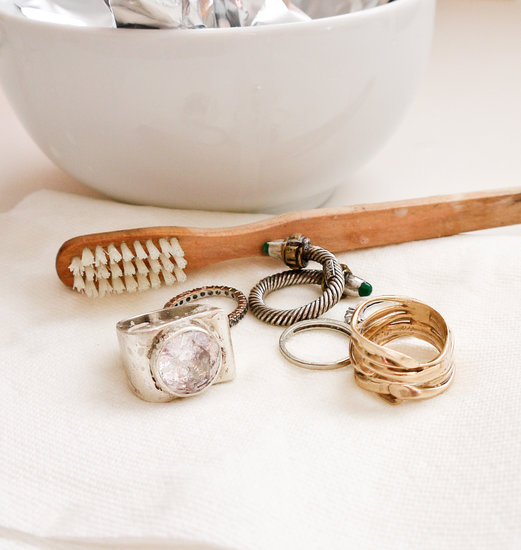
You need: a glass or ceramic bowl, aluminium foil, baking soda (sodium bicarbonate), a pinch of salt, boiling water.
- 1. Line the bowlCover the inside with aluminium foil, shiny side up. Use glass or ceramic, not a metal bowl.
- 2. Lay the silver inPut the pieces so they are touching the foil. Contact is essential — the reaction only runs where silver meets aluminium. Do not stack pieces on top of each other.
- 3. Pour the solutionBoil a litre of water with about a tablespoon of baking soda and a teaspoon of salt, then pour enough to cover the pieces.
- 4. WaitTwo to five minutes is usually enough. For heavy tarnish, refresh the hot solution and repeat. A faint sulfurous smell during the reaction is normal.
- 5. Rinse and dryRinse thoroughly and dry completely. Any moisture left behind brings the tarnish back faster. Finish with a soft cloth.
When not to use it: on gem-set pieces, anything with pearl, opal, turquoise, amber or coral, glued stones such as marcasite, deliberately oxidised silver, and worn silver plate.
Its limitation: on mirror-bright surfaces it can leave a slightly matte finish. A light pass with a polishing cloth afterwards restores the shine.
Method 2 — The silver polishing cloth (the right tool for routine care)
This is a two-layer cloth impregnated with polish: the inner layer lifts tarnish, the outer buffs and, in most brands, leaves an anti-tarnish residue behind.
- Use it dry. Never wet it and never wash it — washing removes the impregnation and leaves you with an ordinary rag.
- The cloth turns black, and that is correct: the black is the sulfide it has taken off.
- It is the first choice for light tarnish. Trying to shift heavy tarnish with a cloth is both exhausting and removes more silver than necessary.
- Excellent on flat surfaces, useless in recessed patterns and inside chain links — it simply cannot physically reach.
Method 3 — Polish creams and pastes
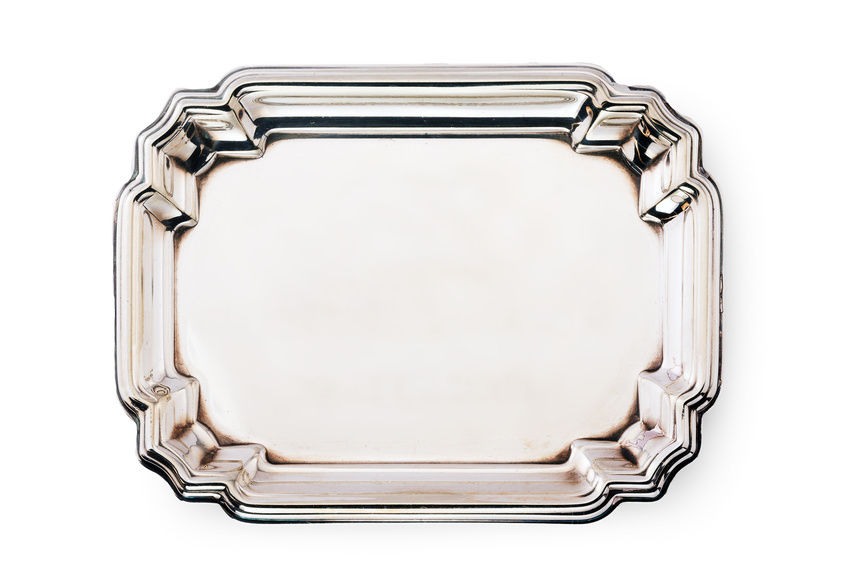
Creams contain a very fine abrasive plus active chemicals. They work well on heavily tarnished flat items: trays, frames, cutlery.
- Use a small amount and work in one direction with light pressure; circular rubbing leaves swirl marks that scatter light.
- Residue drying in the recesses leaves white deposits; brush it out gently and rinse well.
- Do not use them often. Each application removes a little silver, and on silver plate that means eventually wearing through to the base metal.
Method 4 — Silver dips
Most “instant” silver dips are acidified thiourea solutions. They work in seconds, and that speed is exactly why they need care.
Conservation research describes their effect plainly: whitening and loss of brightness, a dull, etched surface, and pitting with repeated use. Worse, the solution leaves sulfur behind on the surface, which makes the piece re-tarnish faster than before it was cleaned.
Practical rules:
- Never leave anything soaking. Seconds are enough; “let it sit a bit longer” is how the surface gets ruined.
- Rinse long and thoroughly immediately afterwards. Insufficient rinsing is the main reason dipped silver goes dark again within weeks.
- Keep it off solder joints and stones.
- Treat it as an occasional emergency measure, not a maintenance routine.
Chains, necklaces and bracelets: a special case
“How do I clean a silver chain” deserves its own answer, because a chain is the one item where a cloth genuinely does not work. The links interlock, so the cloth cannot reach the inner faces; you polish the outside and the chain still reads grey.
- The foil method is the correct choice. The solution flows into every link, reaching where a cloth cannot.
- Lay the chain out flat in the bowl rather than in a heap; touching surfaces in a tangle clean unevenly.
- Do not pull or twist a fine chain. Tarnished chain is not brittle, but thin links deform easily.
- Dry it hanging up afterwards; water trapped between links accelerates fresh tarnish.
- Check the clasp afterwards — baking soda residue inside the mechanism stiffens it over time.
Methods that do damage, and methods that do nothing
The most widely repeated tips are unfortunately the most harmful.
Toothpaste. The most common piece of advice and the riskiest. Most toothpastes contain abrasives, and silver is a soft metal; the result is not shine but a network of micro-scratches invisible to the eye that scatter light and leave the piece looking dull over time. Whitening pastes are more abrasive still. Gel toothpastes contain no abrasive at all, so they do nothing.
Glass cleaner. Many contain ammonia. Ammonia attacks silver, particularly solder joints and plating, and degrades the adhesive in glued settings.
Bleach and chlorine-based cleaners. Absolutely not. Chlorine reacts with silver to form silver chloride — unlike tarnish, this is a permanent, whitish, matte damage that polishing cannot reverse.
Vinegar and lemon. The acid removes tarnish poorly while attacking plating, solder joints and porous stones such as turquoise and pearl. Mixing it with baking soda achieves nothing either — the two neutralise each other and fizz.
Hand sanitiser. Removes oils and grime, does nothing to silver sulfide. The piece looks briefly cleaner and the darkness stays exactly where it was.
Ketchup. Mildly acidic and mildly abrasive, so it does eventually work — slowly, messily, and with residue sitting in recesses prolonging acid contact. With a better method available, there is no reason to choose it.
Dropping pieces straight into boiling water. Thermal shock can crack stones and loosen glued settings.
What a “silver cleaning machine” actually does
Two very different devices get called the same thing.
The ultrasonic cleaner. Microscopic bubbles in the liquid strip dirt, grease and cosmetic residue, and it is excellent at getting into engraved detail. But it does not remove tarnish: silver sulfide is chemically bonded to the surface, and mechanical agitation will not lift it. It must also be kept away from pearl, opal, emerald, amber and glued stones — the vibration cracks stones or dissolves adhesive.
The tumbler (rotary or vibratory, with steel shot). This is the jeweller’s method: the piece is burnished as the shot rolls over it, which polishes without removing metal and works beautifully on complex items like chains. Expensive for home use, but it is usually what a jeweller does when you hand a piece over the counter.
Hard limits on stones and plating
- Pearls: never soak, never scrub with baking soda. Baking soda is abrasive and dulls the nacre. Wipe with a damp cloth, nothing more.
- Opal: moisture-sensitive; in doublets and triplets water gets between the layers and ruins the stone permanently.
- Turquoise, amber, coral, lapis: porous, and they absorb soap, chemicals and dye.
- Emerald: usually oiled; hot water and chemicals strip the filling.
- Marcasite and other glued settings: hot solution loosens the adhesive and stones fall out.
- Rhodium-plated silver: that bright white non-tarnishing finish is rhodium. Abrasive creams and thiourea dips wear the thin plating away. Wipe with a damp cloth only.
- Silver plate (not solid 925): every abrasive method thins the plating. The foil method is safe chemically, but if the plating is already worn the base metal underneath will show.
What to buy, and when to hand it over
For most people the whole kit is a polishing cloth — the cheapest item on the list and the one that gets used most — plus baking soda and foil from the kitchen, which cost effectively nothing. A polish cream is worth having if you own trays or cutlery. Dips are the most expensive per use once you count the damage they do.
Jewellers will usually clean and polish a piece bought from them for free or for a token charge, and they have the tumbler and ultrasonic equipment to do it properly. For a heavily tarnished, gem-set or oxidised item, that is both cheaper and safer than experimenting at home.
Slowing tarnish down: where the real gain is
You cannot stop tarnish, but you can easily halve its speed.
- Store pieces in airtight bags. A zip-lock bag works. Add a silica gel sachet and, if you have them, an anti-tarnish strip.
- Keep rubber away. Rubber bands contain sulfur and leave a distinct black line wherever they touch silver. Wool and some cardboards are poor storage for the same reason.
- Put jewellery on last and take it off first. Let perfume, hairspray, sunscreen and hand cream dry before putting silver on.
- Take it off in pools and hot springs. Chlorine and sulfurous thermal water damage silver quickly, sometimes permanently.
- Watch the kitchen. Eggs, onions, mustard and mayonnaise are sulfur-rich and will mark silver cutlery within hours.
- Wearing it regularly helps. Skin contact and light friction slow tarnish. The fastest-tarnishing silver is the piece forgotten in a drawer.
Frequently Asked Questions
What do you clean silver with? The safest method is aluminium foil, baking soda and hot water, which chemically converts tarnish back into silver and removes no metal. For everyday upkeep use an impregnated silver polishing cloth, and for heavily tarnished flat pieces a polish cream.
How do I clean silver at home? Line a glass bowl with foil, lay the silver so it touches the foil, boil a litre of water with a tablespoon of baking soda and a teaspoon of salt, and pour it over. Wait two to five minutes, rinse and dry completely.
Why does silver tarnish? Because it reacts with sulfur compounds in the air to form silver sulfide (Ag₂S) on the surface. It is not rust and not dirt but a chemical surface layer.
How do I clean heavily tarnished silver? The heavier the tarnish, the more the foil method is worth using — polishing heavy tarnish by hand takes ages and removes far more silver than necessary. Repeat the bath if one round is not enough.
How do I clean a silver chain? A cloth cannot get between the links, so use the foil and baking soda method. Lay the chain flat rather than in a heap and dry it hanging up afterwards.
How do I clean a silver necklace at home? If it has no stones and no oxidised detail, treat it exactly like a chain. If there is a stone in the pendant, or the pattern is deliberately blackened, do not soak it — polish only the raised surfaces with a cloth.
Does the aluminium foil trick actually work? Yes, and the chemistry is unambiguous: 3 Ag₂S + 2 Al → 6 Ag + Al₂S₃. The aluminium takes the sulfur and the silver stays on the surface as metal, which is why there is no silver loss.
Can I clean silver with baking soda alone? Not as a scrubbing powder — on its own it is abrasive and scratches. Its correct role is as the electrolyte in hot water alongside aluminium foil.
Can I polish silver with toothpaste? You can, but you should not. Most toothpastes are abrasive and silver is soft, so you build up micro-scratches that make the piece progressively duller. Gel toothpastes have no abrasive and therefore no effect.
Does vinegar clean silver? Not well, and it causes harm. The acid shifts tarnish weakly while damaging plating, solder joints and porous stones such as turquoise and pearl.
Can I use glass cleaner on silver? No. Many contain ammonia, which attacks silver, especially solder joints and plating, and degrades adhesive in glued settings.
Will bleach clean silver? No — it causes permanent damage. Chlorine forms silver chloride, a whitish matte film that cannot be polished away.
Are silver dips bad for silver? They are fast but costly. Conservation studies find they whiten and dull the surface, etch it, and pit it with repeated use; they also leave sulfur behind, which makes the piece re-tarnish sooner. Never soak, and always rinse thoroughly.
How do I use a silver polishing cloth? Dry, in straight strokes with light pressure. Never wash it — washing removes the impregnation. The cloth turning black is normal; that is the sulfide it has lifted.
Does an ultrasonic cleaner polish silver? It removes dirt and grease very well but not tarnish, because silver sulfide is chemically bonded to the surface. Keep pearls, opals, emeralds and glued stones out of it entirely.
How do I clean oxidised or antiqued silver? Not with the foil method — that removes the black layer that forms the design, and it cannot be restored. Polish only the raised surfaces with a cloth and leave the recesses untouched.
Can I soak gem-set silver jewellery? No. Pearls, opals, turquoise, amber, coral and glued stones are all damaged by hot solutions. Clean these pieces superficially with a damp cloth and, if needed, a soft brush.
How do I care for rhodium-plated silver? With a damp soft cloth only. Abrasive creams and thiourea dips wear away the thin rhodium layer and the silver underneath starts to show.
Why does 925 sterling tarnish so quickly? Sterling is 92.5% silver and about 7.5% other metal, usually copper. That copper content is largely what accelerates the darkening; fine silver tarnishes more slowly but is too soft for most jewellery.
Can scratches in silver be removed? Fine surface scratches can be reduced with polish cream. Deep scratches need a jeweller to sand and re-polish, and that process removes some metal.
How do I stop silver from tarnishing? Store it in airtight bags with silica gel and anti-tarnish strips, keep it away from rubber bands, put it on after perfume and cream, take it off in pools and hot springs, and keep it away from sulfur-rich foods like eggs and onions.
Can silver be made tarnish-proof? Not entirely, but it can be slowed a great deal. Rhodium plating largely prevents tarnish; otherwise storage conditions and regular wear are the most effective measures.
Sources
- Compound Interest — Removing tarnish from silver: the chemistry of silver sulfide and the foil method. https://www.compoundchem.com/2013/12/16/removing-tarnish-silver/
- Chemistry LibreTexts — Cleaning silverware: electrochemical reaction. https://chem.libretexts.org/Courses/University_of_California_Davis/UCDemos/Cleaning_Silverware__Electrochemical_Reaction
- Studies in Conservation — Silver and acid-thiourea silver dips: rinsing and aging monitored by electrochemistry. https://www.tandfonline.com/doi/full/10.1080/00393630.2020.1773056
- Coin World — Silver dips: why conservators do not recommend them. https://www.coinworld.com/news/precious-metals/silver-dips-unrecommended.html
- Western Australian Museum — Conservation manual: silver. https://manual.museum.wa.gov.au/book/export/html/30/index.html