How to Connect a Gas Cylinder Safely, Step by Step
Compiled and fact-checked from cited sources, reviewed by our editorial team.
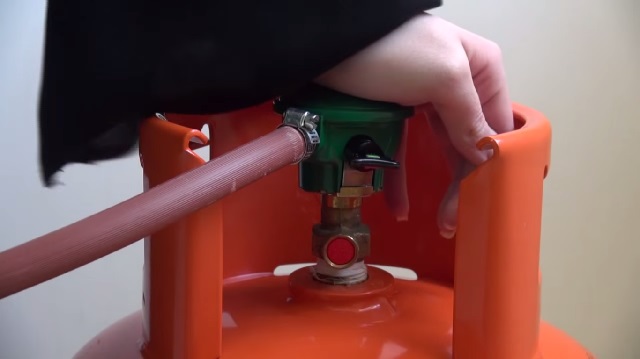
Changing a gas bottle is a five-minute job, and the part almost everyone skips is the one that actually matters: the leak test. Fitting the regulator is the easy half. Proving that the joint you just made is not leaking is the half that keeps the kitchen intact.
There is a second thing worth knowing before you start. There is no single “gas bottle connection” — there are several, and they are deliberately incompatible so that you cannot put a high-pressure appliance on a low-pressure supply. Getting the wrong regulator is the most common reason a bottle “won’t fit”.
First work out which connection you have
Pick up the regulator you already own and look at what it does. There are only two mechanisms.
Clip-on. The regulator sits on top of the valve and is pushed down until a collar snaps home with an audible click. To release it you lift or lower a ring with your fingers. No tools at all. In the UK this covers 21 mm clip-on butane (blue Calor bottles, 28-30 mbar) and 27 mm clip-on propane, sold as Patio Gas in the green 5 kg and 13 kg bottles at 37 mbar. Spain, Portugal and France use the same idea with their own collar sizes.
Screw-on. The regulator screws directly into the valve. On almost every European propane bottle this is a left-hand thread: you tighten it by turning anticlockwise. The thread is deliberately reversed so a propane regulator cannot be forced onto a bottle it does not belong on. In the UK this is the POL propane fitting at 37 mbar.
North America. The 20 lb barbecue cylinder uses an OPD valve — the overfill protection device, identified by the triangular handwheel — with a Type 1 (QCC1) connection. This one is a right-hand thread and is hand-tight only. Do not put a wrench on it; the seal is a rubber face seal and over-tightening damages it.
Three things before you touch anything. Every appliance control off. No naked flame, lit cigarette or running burner anywhere in the room. And open a window — but think about ventilation at floor level, because LPG is heavier than air and a leak sinks rather than rises.
Step by step
1. Turn the gas off at the bottle
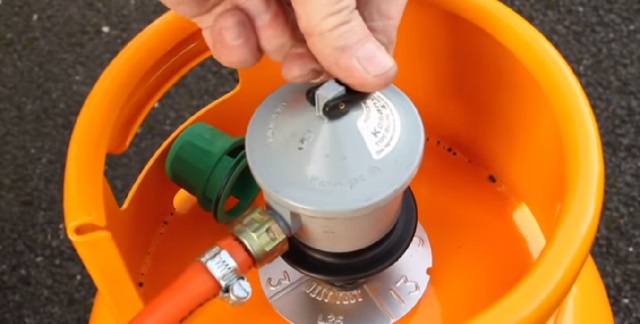
Before you disturb anything, put the regulator lever or knob into the off position — a quarter turn clockwise on most clip-on regulators, or fully clockwise on a screw-on valve handwheel.
An “empty” bottle is rarely completely empty; there is nearly always a little liquid left in the bottom. Pull the regulator off with the valve still open and that residue vents into the room.
2. Release the regulator
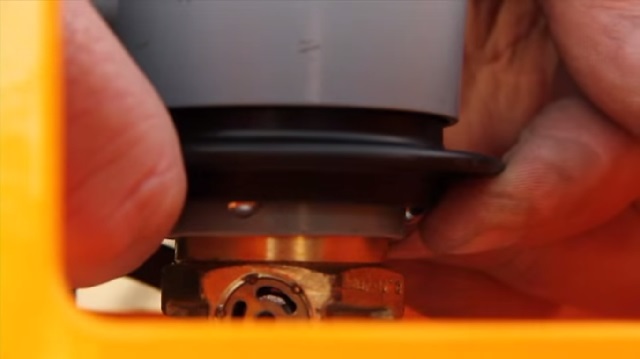
On a clip-on, grip the collar at the base of the regulator, push down or lift as the design requires, and pull the regulator straight up. If it resists, stop — it is almost always because the gas is still switched on.
On a screw-on, use the correct spanner and remember the thread direction: on a left-hand thread you loosen clockwise.
3. Take the empty bottle out and cap it
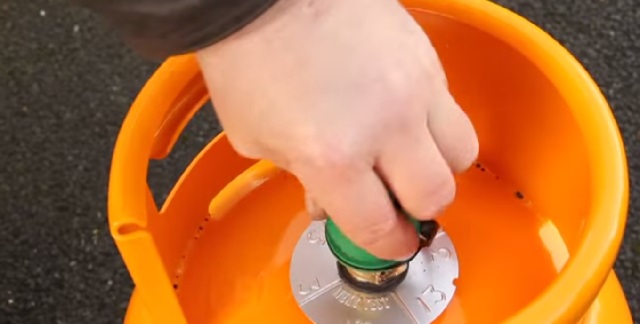
Put the protective cap or plug back on the empty bottle and move it out of the room. An empty bottle deserves the same treatment as a full one: upright, out of the sun, away from heat. The gas-air mixture left inside is, if anything, more readily ignitable than liquid LPG.
4. Break the seal on the new bottle
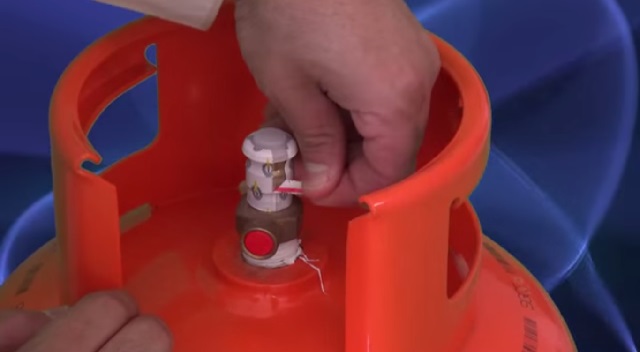
A new bottle arrives with a tamper seal — shrink film, a plastic cap or a sealed ring. That seal is your proof the bottle has not been opened since it left the filling plant. If the seal is broken or missing, refuse the bottle.
With the seal off, look into the valve opening. Grit, dust or a squashed washer will cause a leak; wipe the face clean with a dry cloth.
5. Fit the regulator
The gas must be in the off position and, on a clip-on, the collar released — a clip-on regulator will not seat if the mechanism is locked, and forcing it damages the sealing face.
Hold the regulator square to the valve, not at an angle, and press straight down until you hear the click. Once seated, it should not rock or twist.
On a screw-on regulator, check the sealing washer first. This small rubber or fibre washer is the whole seal; if it is missing, flattened, cracked or hardened, the joint will leak no matter how hard you tighten it. Replace it rather than over-tighten.
6. Check the hose while you are there
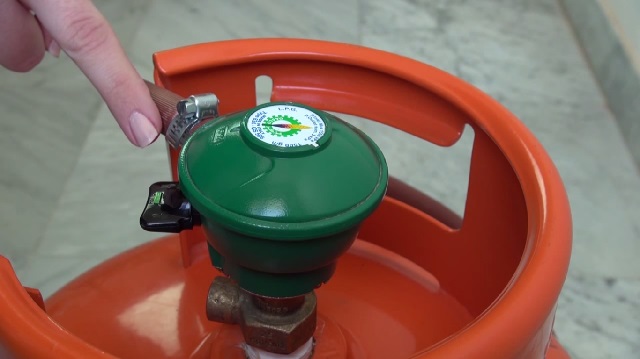
The hose is where most leaks actually start.
- It must be the correct type for LPG and, in the UK, marked to BS 3212 or the current equivalent.
- It must be one piece. Joining two hoses together is not acceptable.
- Keep it short — long enough to reach without strain, never coiled behind the bottle or run across a hot oven.
- Both ends must be secured with a hose clip, tightened firmly but not so hard that they cut into the rubber.
- Rubber hose carries a date. Replace it by that date, and earlier if it is cracked, hardened, sticky or scuffed.
7. Leak test, then light it
Do not light anything until the joint has been tested. Mix washing-up liquid into water until it foams properly, and brush that foam onto three places:
- Where the regulator meets the bottle valve
- The hose clip at the regulator end
- The hose clip at the appliance end
Now turn the gas on and watch. Bubbles growing anywhere mean gas is escaping. Turn the gas straight back off, open the window, and fix the fault before going any further — usually a fresh washer, a re-seated regulator or a tightened clip.
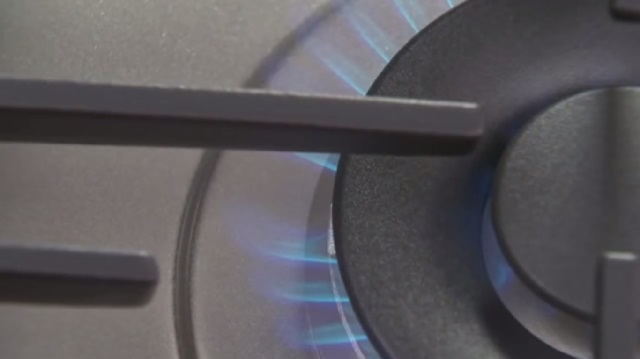
If the test is clean, light the burner. A correct flame is blue and steady. Yellow, orange or lifting flames mean the gas-air mixture is wrong: either the jets are blocked or the regulator is the wrong pressure for the appliance.
Never test for leaks with a flame. The advice to "run a lighter along the joint" still circulates and it is lethal: find a small leak with a naked flame and what you have found is a fire, not a leak. Washing-up liquid costs nothing and does the same job properly.
Turning the gas on, off and disconnecting
Off. On a clip-on regulator, turn the lever or knob a quarter turn clockwise to the off position. On a screw-on bottle, close the valve handwheel clockwise until it stops — firmly, but do not force it. Turning the appliance off does not turn the bottle off; the hose and regulator stay pressurised.
When to turn it off. Every time is not excessive, but two occasions really matter: overnight and whenever you leave the house for more than a day. A slow hose leak with nobody home builds up for hours, and because LPG sinks you may not smell it at head height when you walk back in.
On. Reverse the process, then wait a couple of seconds before lighting — especially if the bottle has stood unused for a long time.
Disconnecting. In order: appliance off, bottle off, regulator released, cap refitted. If you are not moving the hose, leave the clips alone — every clip that is loosened and re-tightened grips a little less well.
Maintenance schedule
Connecting a bottle is a one-off. Leaks come from parts that age.
- Every bottle changeInspect (and on screw-on fittings, renew) the sealing washer. A crushed or hardened washer is the single most common cause of a leak at the bottle.
- By its printed dateReplace the hose. Rubber LPG hose carries a manufacture or expiry date. Go by that date, not by how it looks — and replace it sooner if there is any cracking, hardening or damage.
- Around ten yearsReplace the regulator. The internal diaphragm ages whether the regulator is used or not, and a tired diaphragm lets the outlet pressure drift.
- Monthly, by eyeClips and hose routing. Check nothing has worked loose and that the hose is not touching a hot surface, trapped behind the appliance or crushed by furniture.
Where the bottle should stand
- Upright, always. A bottle used on its side delivers liquid rather than vapour, and liquid reaching the burner produces an uncontrollable flame.
- Lower than the appliance, and never inside a sealed cupboard.
- At least a metre from any heat source — radiator, oven, stove, direct sun. Heat raises the pressure inside.
- Never below ground. Basements and cellars are the worst place for LPG: because it is heavier than air, a leak has nowhere to go.
- Spare bottles follow the same rules. A full spare baking in the sun on a balcony is more dangerous than the one in use.
If you smell gas
LPG has no smell of its own. That sharp, sulphurous odour is a stenching agent added deliberately so that you can detect a leak. Smelling it means the safety system is working.
- Create no ignition source. No lighters, matches, cigarettes.
- Do not touch any electrical switch. Do not turn anything on or off, and do not run the extractor fan. The spark inside a switch is an ignition source. Do not use your phone in the room either.
- Turn the gas off at the bottle.
- Open doors and windows. Because the gas pools low, sweeping it towards an open door at floor level helps.
- Move the bottle outside if you can do so safely.
- Call for help from outside the building — the emergency services and your gas supplier.
Never do these
- Never refill a cylinder yourself or decant gas from one bottle to another. Filling is done at licensed plants, by weight, with checks. Decanting releases liquid LPG that causes severe cold burns and forms an explosive cloud at ground level.
- Never cut, drill or grind an “empty” cylinder. The residual gas-air mixture inside is exactly in the explosive range. Empty bottles go back to the supplier.
- Never warm a bottle to get more gas out of it. Hot water, blankets and nearby heaters all raise the internal pressure dangerously. If output drops in the cold, move the bottle somewhere warmer or use propane, which vaporises at much lower temperatures than butane.
- Never join two hoses. The junction is the most likely leak point in the whole system.
- Never use a regulator of the wrong pressure because it happened to fit. A 30 mbar regulator on an appliance built for 50 mbar starves it; the reverse over-gasses it.
- Never test for leaks with a flame.
Frequently Asked Questions
How do you connect a gas cylinder? Turn the gas off, release and remove the old regulator, cap the empty bottle, break the seal on the new one, check or renew the sealing washer, then fit the regulator square to the valve until it clicks (clip-on) or screws home (screw-on). Then brush soapy water over every joint, turn the gas on and check for bubbles before lighting anything.
Which regulator do I need? It depends on the bottle and the gas. In the UK, butane bottles take a 21 mm clip-on at 28-30 mbar, Patio Gas propane takes a 27 mm clip-on at 37 mbar, and older propane bottles take a screw-on POL fitting at 37 mbar. Check what the appliance is rated for as well — the pressures are not interchangeable.
Why won’t my regulator fit the bottle? Almost always because it is the wrong type. A butane clip-on will not fit a propane bottle and vice versa, and the collar sizes differ. On a clip-on, the other possibility is that the gas is still switched on — the mechanism will not seat while it is locked.
Which way does a gas bottle thread turn? Most European propane fittings use a left-hand thread: tighten anticlockwise, loosen clockwise. The North American Type 1 (QCC1) connection is the exception — right-hand thread, and hand-tight only, no spanner.
How do I know the connection is not leaking? Brush thick soapy water onto the regulator-to-bottle joint and both hose clips, then turn the gas on. Any bubble that grows is a leak. Turn the gas off immediately and fix it.
Can I use a lighter to check for a gas leak? No, and this advice kills people. Use soapy water. A flame does not reveal a leak, it ignites it.
How do I turn a gas bottle off? On a clip-on regulator, turn the lever or knob a quarter turn clockwise to off. On a screw-on bottle, close the valve handwheel clockwise. Switching the appliance off is not the same thing — the hose stays full of gas.
Should I turn the gas off at the bottle every night? It is good practice, and it is genuinely important before you go away for more than a day. Slow leaks accumulate when nobody is home.
How do I remove a gas bottle? Turn the appliance off, turn the bottle off, release the regulator collar (or unscrew it the correct way for the thread), lift the regulator clear and refit the bottle’s protective cap.
How often should the hose be replaced? By the date printed on it, and sooner if it shows cracks, hardening, stickiness or damage. Rubber LPG hose does not last indefinitely even unused.
How often should the regulator be replaced? Around every ten years. The internal diaphragm ages with time rather than use, and worn diaphragms let the outlet pressure drift.
What is the sealing washer for? On a screw-on connection the small rubber or fibre washer inside the regulator nut is the entire seal. If it is missing, flattened or hardened, tightening harder will not stop the leak — replace the washer.
Is LPG heavier or lighter than air? Heavier. A leak sinks and pools at floor level rather than rising, which is why ventilation matters at floor level and why basements are the worst place to keep a cylinder.
Does LPG smell? Not by itself. The strong smell is a stenching agent added on purpose so leaks can be detected by nose.
Can I refill a gas bottle myself? No. Filling is done only at licensed plants, by weight, with valve and cylinder checks. Decanting from one bottle to another is illegal in most countries and causes cold burns and ground-level gas clouds.
Can I cut up an empty gas bottle? No. The residual gas-air mixture inside an “empty” cylinder is in the explosive range, and cutting or drilling supplies the spark. Return empties to the supplier.
Can I connect a gas bottle to my boiler? Not directly. Boilers are built for a specific gas at a specific pressure; running one on LPG requires a manufacturer-approved conversion carried out by a qualified engineer. A single portable cylinder also cannot vaporise fast enough to feed a boiler — it frosts over and the pressure collapses.
Why is my flame yellow instead of blue? Yellow or orange flames mean the gas is not getting enough air, or the pressure is wrong. Check for blocked burner jets and confirm the regulator pressure matches what the appliance requires.
The gas stops flowing in cold weather — what can I do? Butane stops vaporising properly near freezing, which is why winter output drops. Move the bottle somewhere warmer, or switch to propane, which works at much lower temperatures. Never apply heat to a cylinder.
Where should I keep a gas cylinder? Upright, on a firm level surface, lower than the appliance, at least a metre from any heat source, well ventilated, and never in a basement or a sealed cupboard.
Can I keep a spare cylinder indoors? Keep spares outdoors in a shaded, ventilated place wherever possible. Storing them inside living spaces, in cellars or on sun-baked balconies is what turns a small leak into a serious incident.
Do I have to get a professional to connect it? For a portable appliance — a barbecue, a patio heater, a camping stove — connecting the bottle yourself is normal. Any fixed installation, or converting an appliance from one gas to another, must be done by a properly qualified engineer, and in the UK by someone on the Gas Safe Register.
Sources
- Calor — How to connect and disconnect your gas bottle. https://www.calor.co.uk/gas-bottles/advice/connecting
- Calor — Which hose and regulator do I need to connect my gas appliance to a cylinder? https://appliances-help.calor.co.uk/hc/en-us/articles/360019316637-Which-hose-regulator-do-I-need-to-connect-my-gas-BBQ-to-a-gas-cylinder
- AmeriGas — Grill tank support: OPD valves and Type 1 connections. https://www.amerigas.com/support/grill-tanks/grill-tanks
- City of Gilroy Fire Department — Guidance on leak testing and maintaining propane cylinders. https://www.cityofgilroy.org/DocumentCenter/View/5966/Guidance-on-Gas-Leak-Testing-and-Maintaing-Propane-Cylinders