How to Soften a Leather Belt Without Ruining It
Compiled and fact-checked from cited sources, reviewed by our editorial team. · Last updated:
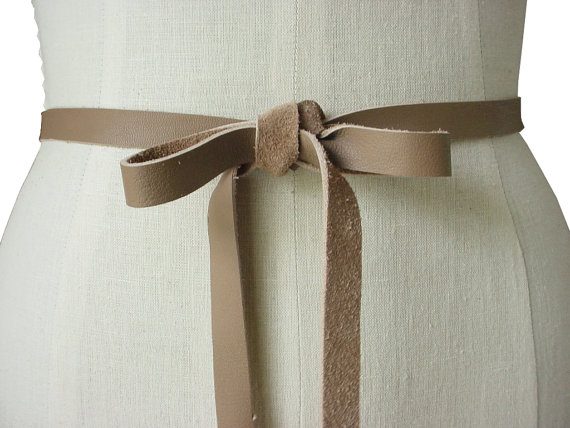
A brand-new belt that feels like a plank and an old belt that has gone board-stiff in the closet are not the same problem, and they do not have the same fix. Getting that wrong is how people end up with a belt that is darker, greasier and no softer than it was.
Leather is a mat of collagen fibre bundles. At the tannery, a stage called fatliquoring puts a thin film of oil between those bundles so they slide against each other instead of sticking together. What we call softness is really that slip — not thinness.
Two different things take the slip away:
- The fibres have never been worked. In a new, thick, vegetable-tanned strap the bundles are still tight and flat. The oil is there; the fibres just have not moved yet.
- The oil film is gone. Water, heat, sunlight, detergent and time either strip it or oxidise it. The bundles dry, bond to each other, and the leather stiffens — then cracks where it bends.
So: on a new belt the job is mechanical, and conditioner is secondary. On a dried-out belt you have to put lubrication back first, then work it. Do it backwards — dumping oil on a brand-new belt — and all you get is a darker, heavier, floppier strap that is still stiff.
First: is it actually leather?
Skip this and everything below is wasted effort. On a PU or bonded-leather belt, oil and conditioner do nothing except leave a tacky film that collects dust.
Look at the cut edge. Real leather is one piece — fibrous, slightly spongy, tightening toward the top surface. Bonded and PU belts show a flat plastic layer on top and a woven fabric backing underneath. You can see the two layers with the naked eye.
Look at the grain. Real grain is irregular. If the same pore pattern repeats every few inches, it is printed.
Bend it. Real leather lightens slightly at the fold and the grain shifts, then recovers. PU just creases and keeps the crease.
Water drop. Lightly finished leather slowly absorbs a drop and darkens; the mark disappears as it dries. On PU the drop beads. Heavily finished leather also repels water, so this test alone is not conclusive.
On labels, “genuine leather” is a low grade of real leather, while bonded leather is ground-up leather scrap glued and pressed into sheets. Bonded never softens — the binder, not the fibre, controls how it behaves.
Match the method to the belt
| Belt type | How to spot it | What actually works |
|---|---|---|
| Vegetable-tanned strap (8-9 oz, 3.2-3.6 mm) | Thick, rigid, pale tan cut edge, woody smell | Flexing plus a thin coat of balm. Genuinely softens and moulds to you with wear |
| Chrome-tanned calf / nappa (5-6 oz, 2-2.5 mm) | Thinner, already supple, greyish cut edge | Conditioner alone is usually enough |
| Suede / nubuck | Matte, napped surface | No oil. Suede brush plus suede conditioning spray |
| Patent | Glassy, mirror-like | Damp cloth and patent care product; oil dulls it permanently |
| Braided / woven | Strips woven together | Small amount of cream worked in with a soft brush; liquid oil pools between strips |
| Glued two-ply | Two layers and a glue line visible at the edge | Light flexing only. Heat and excess oil delaminate it |
| PU / bonded | Fabric backing at the cut edge | Oil does nothing; wear and flexing only |
Method 1: Flex it by hand (five minutes, no risk)
This works on almost every belt, cannot damage anything, and on a new belt it is often the whole answer.
- Protect the buckle. If it comes off (Chicago screws or snaps), take it off. If not, leave the buckle end alone — it is doubled leather there anyway.
- Hold the belt with both hands, about 6-8 inches apart.
- Bend it into a U with the grain side out, then reverse the bend. Ten to fifteen times per section.
- Work down the whole length, tip to buckle, twice.
- Finish by rolling the belt against its natural curl and banding it for an hour or two.
You are sliding fibre bundles past each other and breaking the bonds between them. You will feel the difference before the five minutes are up.
The table-edge trick. For a really rigid strap, hold it at 45° against a table edge and draw the flesh side (the matte back) back and forth along the edge. Never do this with the grain side — you will scuff the finish. Make sure the edge is smooth and unvarnished.
Do not flex a cracked belt. If the surface is crazed and scraping the back with a fingernail produces powder, the fibre structure has collapsed (conservators call it red rot). Flexing only speeds up the break. That belt will not soften; it will disintegrate.
Method 2: Condition it properly (the real fix for dry leather)
What to buy. Look for lanolin, beeswax, jojoba or mink oil on the label — sold as leather balm, leather conditioner or leather cream. Common shelf options in the US and UK include Bick 4, Lexol and Leather Honey. Polish is not conditioner: polish sits on top and adds shine, it does not restore flexibility.
Saddle soap is not a conditioner either. It is an alkaline cleaner. Used often it strips more oil than it replaces and can leave leather stiffer than before. Clean with it only when a belt is genuinely soiled, then condition afterwards.
- Clean first. Wipe off dust and old polish with a barely damp cloth, or a proper leather cleaner. No dish soap, no baby wipes — they pull out what oil is left. Conditioner cannot get past a dirty surface.
- Let it dry fully, an hour or two at room temperature. Never condition wet leather.
- Patch test. A pea-sized dab on the inside near the buckle, wait two or three hours, and see how much it darkens. On light leather that darkening is permanent.
- Two thin coats, never one thick one. A pea-sized amount on a clean cotton cloth, worked in with small circles. A thick coat will not absorb; it stays on the surface, goes tacky and eventually grows mould.
- Do the back. The flesh side is unfinished and that is where most absorption happens. Conditioning only the pretty side is the single most common reason a belt stays stiff.
- Wait 20-30 minutes, or overnight on a badly dried belt.
- Buff off the excess with a dry cloth. Nothing should be left that takes a fingerprint.
- Then flex for two minutes. Oil only distributes between the fibres when the fibres move.
- Repeat if needed — two or three light rounds 24 hours apart beat one heavy application every time.
On natural, tan and light-coloured belts, expect one or two shades of permanent darkening. If you do not want that, use a colourless wax-heavy balm and apply it sparingly.
Method 3: Moisture plus movement (used carefully)
Bone-dry leather cracks when you force it, and a little moisture temporarily lets the fibres slide. But soaking a belt is a disaster: water carries out both the remaining oils and some of the tanning agents, and as it dries the fibres pack tighter than before. That is exactly why a belt that got caught in the rain comes out like cardboard.
The right sequence:
- Mist very lightly with a spray bottle — damp-looking, not wet.
- Start flexing immediately, and keep working it for 10-15 minutes.
- Dry in the shade at room temperature. No radiator, no sun, no hairdryer.
- Condition as soon as it is dry. Skipping this leaves the belt worse than when you started.
Washing machine, dishwasher, boiling water: none of these belong anywhere near a leather belt.
Method 4: Gentle heat, and where the limit is
Heat thins the conditioner and speeds absorption, but leather has a hard ceiling. Wet vegetable-tanned leather has a shrinkage temperature of roughly 70-80 °C (160-175 °F); above it the fibres contract irreversibly and the leather comes out smaller and rock hard. Dry leather held above 60 °C for long simply loses its oils.
Safe version: hairdryer on the lowest setting, 8-10 inches away, moving constantly, for a minute or two. The leather should feel warm, never hot. Condition and flex immediately afterwards.
The "seal it in a bag and leave it in the sun" tip is a bad one. Inside a closed plastic bag in summer sun the temperature clears 60-70 °C easily, and the moisture that comes out has nowhere to go. The belt bakes and sweats at the same time. Same reason to avoid radiators, hot air vents, a car dashboard and the oven.
Method 5: Break it in by wearing it
For a thick vegetable-tanned strap this is still the best method; it just takes patience. Body heat and movement mould the belt to your waist, which is something no factory-soft belt gives you.
To speed it up: wear it around the house for a few hours a day the first week, always on the same hole (rotating holes stretches the strap unevenly), and give it a minute of hand flexing every evening. After two weeks it is a different belt.
Which products help, and which quietly ruin leather
| Product | What it does |
|---|---|
| Leather balm (lanolin + beeswax + jojoba) | The safe default. Softens, does not oxidise, does not smell |
| Mink oil | Absorbs well, softens, adds water resistance. Darkens slightly and evenly |
| Neatsfoot oil | Strong softener, but acidic — it weakens cotton stitching over time (modern synthetic thread is fine). Prone to oxidising, and it darkens light leather unevenly. Not for pieces you want to keep for decades |
| Jojoba oil | Chemically a wax, so it does not go rancid. Light and clean on thin belts |
| Olive, coconut, almond, vegetable oil | No. Food oils oxidise inside the leather and go rancid, leaving a smell you cannot remove and weakening the fibres. They look great on day one — the damage shows up months later |
| Vaseline / mineral oil | Does not penetrate; it leaves an occlusive film. Feels soft briefly, then attracts dust and traps moisture inside |
| Saddle soap | A cleaner. Alkaline, and overused it strips oils |
| Acetone, rubbing alcohol, paint thinner | Absolutely not. They dissolve the finish and the remaining oils |
| WD-40, silicone spray, hair conditioner | No. None of these have anything to do with leather chemistry |
Why museums stopped oiling leather
This is the part almost nobody mentions. The first edition of the Canadian Conservation Institute’s leather note recommended leather dressings and saddle soap. The current edition withdrew that advice and explains why:
- Extra oil lubricates in the short term but oxidises over time and stiffens the leather further — today’s softening treatment can be the reason it is hard in ten years.
- Dressings darken the surface and stain adjacent materials.
- They attract dust and insects.
- Museum practice now is to minimise dressings and put the effort into storage conditions instead.
Translated to everyday life: conditioning a belt every month is not kindness. Two or three light coats a year is plenty, and where the belt lives matters more than what you rub on it. Repeatedly slathering product on an old belt you care about is the worst thing you can do to it.
Never do this
- Wipe with acetone, then smear on Vaseline. This recipe has been copied around the internet for years and it is harmful. Acetone does not “open the pores” — it dissolves the finish and the oil between the fibres. The Vaseline that follows does not replace them; it just makes the surface slippery. Result: a belt that seems soft for a week and turns brittle within months.
- Clean it with rubbing alcohol. Alcohol is a degreaser. It has a narrow use in spot cleaning and no use at all in softening.
- Put oil or cream on suede. The nap flattens and the stain is permanent.
- Use too much product. What is not absorbed sits on the surface, holds dust and starts mould in a humid closet.
- Machine wash or soak it.
- Dry it on a heat source.
- Store it folded. The fold becomes a permanent crease and the leather cracks there.
Belt-specific problems
The buckle end never softens. It is the thickest point — folded and stitched. Give that four-inch section its own two or three minutes of flexing and a second coat of balm. Wipe any cream off the metal.
The tip curls and will not feed through the keeper. Roll the tip the opposite way, band it, and leave it overnight.
The belt squeaks. Dryness between the plies. Ease the layers apart slightly, put a very small amount of balm between them, then work it.
The holes no longer line up. Leather stretches a few millimetres with use, so one hole can drift out of position. A rotary leather punch costs little and does a cleaner job than a nail — never heat a nail and burn through, it carbonises the fibres around the hole.
The colour has faded. Softening will not restore colour; that is a separate job with leather dye.
How long it takes
| Situation | Method | Realistic time |
|---|---|---|
| New thick vegetable-tanned strap | Flexing plus daily wear | Noticeable in 5 minutes, fully moulded in 2-4 weeks |
| New thin belt | Flexing | A few days |
| Belt dried out in a closet | Clean, 2-3 coats of balm, flexing | 2-3 days |
| Belt stiffened after a soaking | Light misting, working, conditioning | A day, sometimes a second round |
| Belt with a cracked surface | — | Not recoverable |
| PU / bonded belt | Flexing | Limited and temporary |
Keeping it soft
- Two or three light coats a year. More often for a belt worn daily or frequently rained on; once a year for one you rarely use.
- Hang it straight or coil it loosely. Never fold it.
- Do not store it in a plastic bag. Leather needs to breathe; plastic traps moisture and starts mould. Use a cotton dust bag.
- Keep it away from radiators, air vents and direct sun. Indoor humidity around 45-55% is ideal.
- Rotate two belts rather than wearing one every day — both last longer.
- If it gets wet, dry it at room temperature and condition it once it is dry.
How to buy a belt that is already soft
Stiffness is usually about thickness, not quality:
- Women’s belts are typically 2-3 mm, men’s dress belts 3.5-4 mm, jean and western belts 4-5 mm. The same leather feels rigid at 4 mm and supple at 2.5 mm. In the US, belt blanks are sold by weight: 8-9 oz is a heavy work strap, 5-6 oz is a dress belt.
- Chrome-tanned calf and nappa belts are soft off the rack; vegetable-tanned strap starts hard, lasts for years and moulds to you.
- Glued two-ply belts feel softer in the shop but delaminate and bubble later. A single-layer full-grain strap is stiffer at first and better long-term.
- In-store test: bend the belt 180°. A white crack line at the fold means a thick plastic finish. If it curves smoothly and springs back, the leather is good.
- “Genuine leather” and “bonded leather” are not the same thing, and only one of them ever softens.
Frequently asked questions
How do you soften a leather belt? Two steps: flex it by hand along its whole length in 6-8 inch sections for about five minutes, then apply a lanolin or beeswax balm in two thin coats to both the front and the back. Let it absorb 20-30 minutes, buff off the excess and flex it again.
How do you soften stiff leather in general? Diagnose it first. New leather needs mechanical work. Dried-out leather needs cleaning, then conditioner, then working. Cracked leather cannot be softened at all.
Will a stiff leather belt go back to normal? If the stiffness is from drying out, largely yes. If it has been heat-damaged — radiator, oven, hot car — or has surface cracks, no. That damage is permanent.
Does Vaseline soften a leather belt? It makes it feel softer without actually softening it. Petroleum jelly does not penetrate; it leaves a film that attracts dust and traps moisture inside the leather. A balm is always the better choice.
Can you use olive oil on leather? Don’t. Food oils oxidise inside the leather, go rancid, leave a smell that never comes out, and weaken the fibres. The nice look on day one is what keeps the myth alive.
Is acetone safe on leather? No. It dissolves the finish and the oils between the fibres and leaves the leather dry and brittle. What people describe as “opening the pores” is the leather being stripped.
Does soaking a belt in water soften it? It does the opposite. Water carries out the remaining oils and the fibres pack tighter as they dry, so the belt ends up harder. Only light misting, immediate flexing and conditioning once dry actually helps.
Can I use a hairdryer? On the lowest setting, 8-10 inches away, moving constantly, briefly — it helps the conditioner absorb. High heat up close shrinks and bakes the leather.
Does saddle soap soften leather? No. It is an alkaline cleaner. Used routinely it removes more oil than it adds and can leave leather stiffer.
Mink oil or neatsfoot oil? Mink oil for anything you want to keep: it absorbs well, darkens evenly and does not oxidise readily. Neatsfoot softens harder but is acidic, oxidises, and darkens light leather unevenly.
How long does a new leather belt take to break in? Two to four weeks of regular wear for a thick strap. The first hand-flexing session gives an immediate improvement, but the moulding takes time.
How do I choose a soft leather belt? Go by thickness — 2-3 mm belts are naturally supple — and by tannage; chrome-tanned calf is soft off the rack. Bend it 180° in the shop: a white crack line at the fold means a heavy plastic finish.
Can a faux leather belt be softened? Not with oils or creams; PU does not absorb them. Only flexing and wear help a little. The stiffness usually comes from the fabric backing and adhesive, not the surface.
What do I use on a suede belt? Never oil or cream — it flattens the nap and stains permanently. Use a suede brush to lift the nap and a spray conditioner made for suede.
My belt is cracked — can it be saved? Conditioner makes fine surface crazing less visible but does not close it. If scraping the back with a fingernail gives powder, the fibre structure has failed and the belt should be replaced.
Will conditioner darken my belt? On light and natural leather, one or two shades, usually permanently. Patch test first, and use a colourless wax-based balm applied thinly if you want to minimise it.
Sources
- Canadian Conservation Institute — Care of Alum, Vegetable and Mineral-tanned Leather (CCI Notes 8/2). https://www.canada.ca/en/conservation-institute/services/conservation-preservation-publications/canadian-conservation-institute-notes/care-alum-vegetable-mineral-leather.html
- US National Park Service — Conserve O Gram 9/1: Leather Dressing. https://www.nps.gov/subjects/museums/upload/09-01_508.pdf
- Collagen and Leather — oxidative stability of fatliquors and their effect on collagen fibres. https://link.springer.com/article/10.1186/s42825-021-00070-3
- Carl Friedrik — comparative test of leather oils (mink, neatsfoot, coconut, olive, mineral). https://www.carlfriedrik.com/magazine/best-oil-for-leather
- Fibrenew — Can I use olive oil on my leather items? https://www.fibrenew.com/blog/olive-oil-on-leather/