How to Ripen Peaches: The Paper Bag Method That Works
Compiled and fact-checked from cited sources, reviewed by our editorial team. · Last updated:
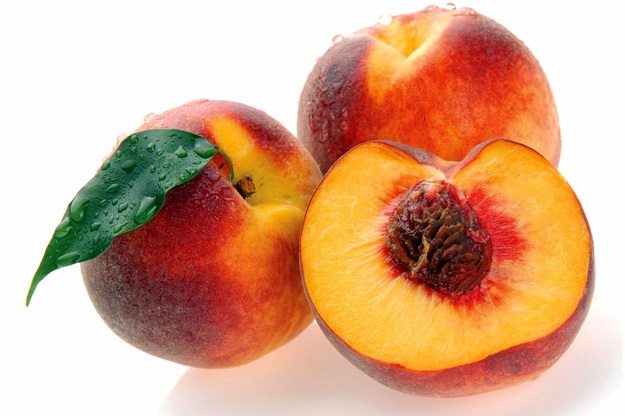
Grocery store peaches are hard for a reason that has nothing to do with the store. Fruit headed for cross-country distribution is picked at roughly 12 to 16 pounds of flesh firmness so it can survive a truck; fruit going to a nearby farm stand gets picked closer to 6 to 8 pounds, which is why it tastes better and bruises if you look at it wrong[1].
The fix takes one item you already have. Put the peaches in a brown paper bag, fold the top over loosely — do not seal it — and leave it on the counter at 65 to 75 °F (18 to 24 °C), out of direct sun. That gives you a soft, juicy peach in 1 to 3 days. Add an ordinary banana and it happens in 12 to 24 hours.
Two rules decide whether it works. Never refrigerate a peach that is still hard — that mistake is permanent. And judge by feel, not by calendar: press the wide shoulder with your whole palm every 12 hours.
Will a rock-hard peach actually ripen?
Partly. Peaches are climacteric: after they leave the tree they keep producing ethylene, the hormone that triggers softening. Enzymes break down the pectin holding the cell walls together, the flesh loosens and releases juice, and the aroma finally shows up. That much happens on your counter.
What does not happen is sweetening. A banana ripens sweeter because it is a starch bank cashing itself out; a peach has no starch reserve, so its sugar is whatever the tree put in before harvest[2]. At home you change texture, juiciness and smell — not flavor. A peach picked green ends up soft and bland.
The ground color test: ignore the red
The red blush is a suntan: it records which side faced the light and which cultivar you are holding. Some varieties are nearly all red while still hard as a stone.
The signal is the ground color — the background shade around the stem and on the underside where the fruit rested against the branch. It runs green → cream → yellow → gold, and the first break away from green is the first honest sign of maturity[1]. Two more clues: wrinkles radiating from the stem cavity mean the fruit is losing water, and a peach heavy for its size is full of juice.
| Ground color at the stem | What it means | What to do |
|---|---|---|
| Distinct green | Picked far too early | Softens, but never tastes good |
| Greenish cream | Borderline | Bag it, 3+ days, modest results |
| Cream, ivory, pale yellow | The sweet spot | Bag it, ready in 1–3 days |
| Deep yellow to gold | Already mature | Eat within 12–24 hours |
Five ways to ripen peaches at home
1. The brown paper bag — 24 to 48 hours
Paper holds the fruit’s own ethylene close to the skin while still breathing enough to let moisture escape — which is why it beats every sealed container.
- 1Do not wash yet. Water strips the bloom on the skin and invites mold. Rinse right before you eat.
- 2Sort out damaged fruit. A bruised or split peach produces a surge of ethylene and drags everything near it into rot[[1]](https://fieldreport.caes.uga.edu/publications/B1555/handling-peaches-harvest-and-postharvest/). Use it today, separately.
- 3Load a single layer. Three or four peaches, not touching. Stacking creates pressure spots that brown before the fruit is soft.
- 4Set them stem-side down. The shoulders carry the weight instead of the delicate tip, where bruises start.
- 5Fold the top loosely. No clip. A sealed bag traps humidity, condensation forms, and you get mold instead of a peach.
- 6Park it at 65–75 °F (18–24 °C). Away from windows, the stove and the top of the refrigerator.
- 7Check every 12 hours. Remove each peach as it softens; one day too long and it goes from perfect to fermented.
2. Paper bag plus a banana — 12 to 24 hours
A high-ethylene companion roughly halves the time. A speckled banana works better than a yellow one because it is already producing at full tilt; a ripe apple or pear does the same job more gently. One piece per bag, and start checking at 8 hours — this is the method for peaches you want tomorrow morning, not for a whole flat.
3. Wrapped in cloth — 2 to 3 days, juiciest result
Spread a clean linen or cotton towel on a tray, set the peaches stem-side down with space between them, and lay a second cloth over the top. Fabric slows water loss more than paper, so the flesh finishes plumper and the juice runs when you bite it. It needs a cool, ventilated spot.
4. Open on the counter — 2 to 3 days, best aroma
A shallow basket or plate, single layer, stem-side down, no cover. Nothing accumulates, so nothing molds, and the aroma develops cleanly. Use it when the peaches are already cream or pale yellow.
5. A jar or vented ripening bowl — when you have no paper bag
A wide glass jar with the lid resting on top, or a two-piece ripening bowl with an adjustable vent. Same principle, but the vent is not optional: airtight becomes a humidity chamber within hours.
| Method | Time | Strength | Watch out for |
|---|---|---|---|
| Paper bag | 24–48 h | Reliable, hands-off | Never seal the top |
| Bag + banana | 12–24 h | Fastest | Overshoots — check at 8 h |
| Wrapped in cloth | 2–3 days | Juiciest flesh | Needs a cool, airy spot |
| Open counter | 2–3 days | Best aroma, no mold risk | Slowest, needs near-mature fruit |
| Vented jar or bowl | 24–48 h | Works with no paper on hand | Airtight = mold in a day |
Temperature and how many days it really takes
Between 65 and 75 °F (18 to 24 °C) the softening enzymes run at their best pace. Above 80 to 86 °F (27 to 30 °C) — a hot August kitchen, a closed car, the space above the dishwasher — fruit softens fast but badly: the skin shrivels because water leaves faster than the flesh can convert, and the texture collapses before the aroma has formed. Below about 55 °F (13 °C) ripening effectively stalls.
Stop counting days. Two peaches from the same bin can be 36 hours apart. The measurement is your hand, twice a day.
How to tell when a peach is ready
Cup the peach in your palm and close your hand gently around its widest point. Ripe fruit yields evenly under broad pressure and springs back a little. Never poke with a fingertip — that concentrates force on one small spot and leaves a bruise that browns by tomorrow.
Test the shoulders, not the tip. The narrow area around the stem always softens first and feels riper than the fruit really is; that is the top reason people cut into a peach still hard at the pit. Then smell the stem cavity — a ripe peach announces itself from a few inches away. Any green left in the ground color means another day.
The refrigerator is the most expensive mistake
Do not refrigerate a peach that is not yet ripe. The damage zone runs from roughly 36 to 46 °F (2 to 8 °C) — precisely the temperature of a home refrigerator. Cold in that range shuts down the pectin-dissolving enzymes while the rest of the fruit's chemistry keeps going, so the peach does not soften; it dries out from the inside. The result is chilling injury: mealy, cottony flesh, browning around the pit, internal reddening. It is irreversible, moving the fruit back to the counter does not fix it, and you usually cannot see it until you take a bite[[3]](https://postharvest.ucdavis.edu/publication-category/chilling-injury).
Commercial storage avoids the zone entirely: peaches are held at 31 to 32 °F (–0.6 to 0 °C) at 90 to 95 percent relative humidity, essentially dormant[1]. A home refrigerator cannot hold that without freezing things. Counter first, fridge only after.
What does not work — and what causes damage
Microwave or oven. Above about 140 °F (60 °C) the enzymes denature permanently. Heat is cooking, not ripening.
Plastic bags. They hold ethylene, but all the moisture too. Condensation plus a warm kitchen equals mold in a day or two.
Sunny windowsill. Direct sun dehydrates the exposed side while the shaded side stays firm — a lopsided, leathery peach.
Soaking in water, or washing before ripening. Both strip the skin’s protective layer and open the door to rot. Rinse only just before eating.
Burying in rice. The trick circulates for avocados and mangoes and is marginal even there. On a peach the fuzzy skin abrades and the dry grain pulls moisture out.
Freezing and thawing. Ice crystals rupture the cell walls and the peach thaws into limp pulp.
Storing peaches once they are ripe
Whole and fully ripe, peaches go on the coldest shelf at 32 to 36 °F (0 to 2 °C) for 3 to 5 days. At this stage chilling injury is no longer a threat — the enzymes have already done their work[4]. Keep them loose in a vented container or an open paper bag, single layer, never sealed in plastic.
Sliced peaches: toss with lemon juice, seal, use within 2 to 3 days. To freeze, slice, spread on a sheet pan until firm, then bag — 8 to 10 months. Home-canned peaches in syrup hold about a year. And take peaches out of the refrigerator 30 to 60 minutes before eating: cold suppresses aroma, and a cold peach tastes like a fraction of itself.
Still hard and flavorless? Cook it
Underripe peaches carry more pectin and more acid, which makes them better than perfect fruit for anything that needs to set or hold its shape.
Grilled peaches. Halve, pit, brush the cut faces with neutral oil. Cut side down over medium-high heat 3 to 4 minutes, flip for 2 to 3 more. Serve warm with vanilla ice cream — the classic use for fruit that let you down raw.
Roasted. Halve, dot with butter, sprinkle brown sugar, roast at 375 °F (190 °C) for 20 to 25 minutes until bubbling at the edges.
Poached in syrup. Two cups water, a scant half cup sugar, juice of half a lemon, a cinnamon stick or split vanilla bean. Simmer the halves 10 to 15 minutes, cool them in the syrup.
Cobbler or crisp. Firm fruit will not dissolve into the topping. Bourbon peach jam sets easily, often with no added pectin. Pickled peaches — vinegar, sugar, cloves, cinnamon — are a Southern staple beside ham or roast pork, and sliced thin the same fruit works in an arugula and feta salad.
Nectarines, donut peaches, apricots, plums and pears
Nectarines are peaches without the fuzz — the same species, one recessive gene apart. Everything here applies unchanged; the thinner skin bruises more easily, so check them sooner. Donut peaches (sold as Saturn peaches) have shoulders that feel soft even when immature, so the palm test misleads — judge them by ground color and smell. White varieties are lower in acid, so they taste sweeter at the same sugar level and soften faster than yellow ones.
Freestone versus clingstone matters in the kitchen, not on the counter. Clingstones dominate the early season and grip the pit, which is why most go to canning; freestones arrive later in summer and the pit falls away when you cut them. Ripening is identical.
Apricots soften in a bag but gain no sweetness. Plums respond very well and turn genuinely juicy. Pears are the one real exception: they ripen properly only after picking, and a pear left on the tree turns gritty at the core — bagging pears is not a rescue, it is the correct method.
Season, for planning: Georgia and South Carolina run roughly mid-May through August; California carries from late June into September. Buying inside those windows does more for flavor than any technique here.
Eight mistakes that ruin peaches
- Refrigerating them the moment you get home — the single most damaging habit, and the cause of mealy fruit.
- Using a plastic bag — trapped humidity means mold, not ripening.
- Stacking fruit in a bowl — every contact point becomes a bruise.
- Bagging bruised fruit with sound fruit — damaged peaches flood the bag with ethylene.
- Testing with fingertips — you are grading each peach with a bruise.
- Washing before ripening — removes the skin’s protection, invites rot.
- Ripening on a sunny windowsill — dries one side, leaves the other hard.
- Buying on redness alone — turn the fruit over and read the ground color.
Frequently asked questions
How long does it take to ripen peaches in a paper bag? Usually 1 to 3 days at 65 to 75 °F (18 to 24 °C) with the top folded loosely, or 12 to 24 hours with a ripe banana added.
Can you ripen peaches in the microwave? No — heat above roughly 140 °F (60 °C) permanently destroys the softening enzymes, so you get a partly cooked peach that still tastes underripe.
Will hard peaches ever get sweet? They get softer, juicier and more fragrant but not sweeter: peaches store no starch to convert into sugar, so sweetness is locked in when the fruit leaves the tree.
Should you put peaches in the refrigerator? Only once fully ripe, on the coldest shelf for 3 to 5 days; refrigerating an unripe peach at 36 to 46 °F (2 to 8 °C) causes irreversible chilling injury.
How do you ripen peaches overnight? Bag them with a speckled banana at room temperature and start checking at 8 hours — that is the only home method fast enough to work overnight.
Why are my peaches hard on the outside and mealy inside? They sat in the 36 to 46 °F cold zone while still unripe, which shuts down the softening enzymes and leaves the flesh cottony however long it then sits out.
Can you ripen peaches in a plastic bag? Avoid it — plastic traps the fruit’s moisture along with its ethylene, and the condensation causes mold before the peach finishes softening.
Should you wash peaches before ripening them? No, wash them right before eating; water removes the skin’s protective bloom and makes the fruit far more likely to rot on the counter.
How do you ripen nectarines and donut peaches? The same way, except nectarines bruise sooner because of the thin skin, and donut peaches feel soft at the shoulders even when unripe, so judge those by ground color and aroma.