Babylights: What They Are, How They Are Done, What They Cost
Compiled and fact-checked from cited sources, reviewed by our editorial team. · Last updated:
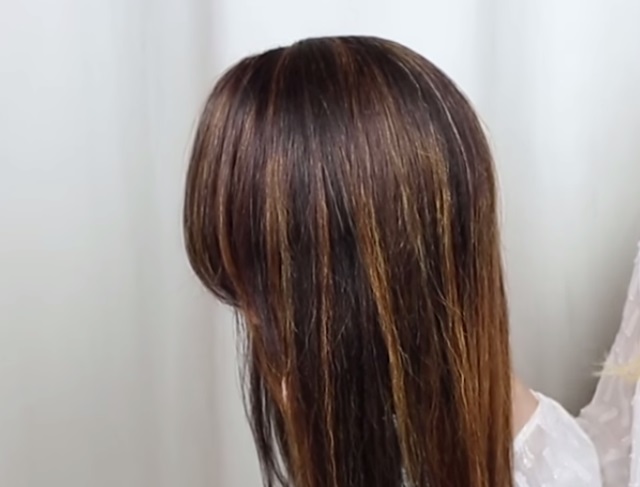
Babylights are not about changing your hair colour. They are about changing how light comes off your hair. Very fine strands are picked out from within the hair, lifted only two or three levels above your natural shade, and scattered through the head. From a distance the colour looks unchanged; as soon as the hair moves, it catches the light.
The name comes from the hair small children have — that soft, uneven lightness around the face and crown that nobody has to ask for. Technically these are highlights, just far finer and far more spread out than the ones most people picture.
So babylights are the wrong service if you want a different colour. They are the right service when you like your colour but the hair reads flat and one-dimensional, and you want depth and movement in it.
Babylights, highlights, balayage, ombré, lowlights, foils
These six words get used interchangeably, and when the client and the colourist mean different things by them, the result is a surprise nobody wanted.
| Technique | Section size | Starts at | Contrast | Choose it when |
|---|---|---|---|---|
| Babylights | Very fine, 2-3 mm | The root | Low, 2-3 levels | You want the same colour with movement in it |
| Highlights | Medium, 5-10 mm | The root | High, 3-5 levels | You want visibly lighter pieces |
| Balayage | Freehand, painted | Mid-lengths to ends | High at the ends | You want regrowth to stay invisible |
| Ombré | Whole zone | A defined line down | Very high | You want a clear graduation at the ends |
| Lowlights | Medium | Root or mid-length | The other direction | The hair is over-lightened and needs depth back |
| Foils | — | — | — | Not a look but a method: wrapping sections in foil |
Two points worth spelling out.
Lowlights are the opposite of babylights. Instead of lifting strands, they place shades a few levels darker than the base back into the hair. They are what rescues hair that has been lightened so often it looks flat and hollow. Babylights and lowlights are frequently done in the same appointment; the balance between them is what makes hair look thick rather than washed out.
Foils are a method, not a look. Wrapping a section in aluminium foil holds heat in, stops lightener from touching neighbouring strands, and gives controlled lift. That is why foil work reaches lighter, cleaner results on dark hair. Balayage usually skips foil altogether — the lightener processes in open air, which is also why it lifts more gently.
Which base colour suits them
Light and mid brown hair is where babylights work most easily. The hair already sits around level 5-6, so lifting two or three levels happens in one session with limited damage, and the result reads like hair that has spent a summer outdoors.
Dark brown and black hair takes more care. Lifting dark hair always passes through an orange-copper stage. Because babylight sections are so fine, that warmth usually reads as a soft glow rather than brassiness — but if you want a cool, ashy result, toning in the same appointment is not optional. Skip the toner and the hair turns yellow-orange within days.
Virgin, never-coloured hair is the ideal canvas: it lifts evenly and predictably, and needs less developer to get there.
Previously coloured hair lifts unevenly. Box-dye build-up resists, ends lift fast. A strand test before the full service is the difference between a good result and a patchy one.
Henna deserves its own warning. Plant-only henna may behave, but many products sold as henna contain metallic salts, and those react with lightener — heat, smell and breakage. Always declare henna history, and never let anyone start without testing a hidden strand.
If you want the DIY route in more depth, see how to highlight hair at home; for shine without any lift at all, hair gloss: when and how is the right page.
How a salon actually does them
- Level and target are set. Your current level (1 black to 10 lightest blonde) is identified and the target is set two or three levels above it.
- The head is sectioned, usually into four, then worked in thin horizontal slices.
- Sections are picked. This is the step that separates babylights from highlights: using the tail of the comb, only about a tenth of each slice is taken — a whisper of hair rather than a ribbon.
- The mix is made. Lightener and developer, generally one part powder to two parts developer, at a consistency that spreads without running.
- Applied and wrapped. The section is laid on foil and painted from roughly 1 cm off the scalp — root hair lifts faster because of body heat — then the foil is folded.
- Checked, not timed. Anywhere from 15 to 35 minutes, with foils opened individually. Processing is judged by eye, never by the clock alone.
- Rinsed and toned. The toner decides whether the result lands cool or warm, and it is the step that stops brassiness before it starts.
- Bond treatment and blow-dry. A bond builder and an acidic rinse close down the porosity of the lifted strands.
Total chair time is 1.5 to 3 hours. Short hair can finish under two; long, dense hair takes the full three because there are simply more foils.
Developer choice decides the result
| Developer | Lift | Where it belongs |
|---|---|---|
| 10 vol (3%) | 1-2 levels | Already-light hair, a whisper of brightness |
| 20 vol (6%) | 2-3 levels | The babylight standard. Ideal on light to mid brown |
| 30 vol (9%) | 3-4 levels | Dark hair, experienced hands, kept off the scalp |
| 40 vol (12%) | More | No place in fine sections — it does not lift them, it dissolves them |
High developer on a tiny section is a contradiction: the section is small, so it lifts fast anyway. This is the single most common mistake in home attempts.
Can you do babylights at home?
You can, with realistic expectations. Two problems are structural: you cannot see the back of your head, and you cannot watch the timing on your own. Babylights look natural because the placement is irregular yet balanced, and in the zone you cannot see, that placement almost always goes wrong.
If you want to try anyway:
- Keep it to the face frame. A few fine pieces at the front, where you can see. It is also the area that shows most.
- Buy 20 vol developer. Nothing stronger.
- Strand test first. Take a hidden section underneath, apply, and check at 10, 20 and 30 minutes. That tells you how your hair behaves.
- Stay 1 cm off the scalp.
- Use foil so sections cannot touch each other.
- First check at 15 minutes, then every five. Never leave lightener on while you do something else.
- Tone after rinsing. Skip this and the odds are strongly in favour of brass.
Avoid: adding heat with a dryer, applying lightener onto the scalp, going over the same section twice, and lemon-juice or hydrogen-peroxide “natural lightening” — the second one is exactly the same chemistry, minus the control.
What they cost
Babylights are priced as a foil service, and the count of foils drives the price. Because the sections are fine and spread out, the total foil count sits below a full head of highlights — but the work is fiddlier, so some salons charge a premium for the precision instead.
| Service | Typical UK | Typical US |
|---|---|---|
| Babylights, face frame / partial | £60-120 | $90-180 |
| Babylights, full head | £120-220 | $200-350 |
| Full head of highlights | £110-200 | $180-320 |
| Balayage | £120-250 | $180-400 |
High-end city salons run well above these ranges. Three things move the number: hair length, foil count and whether toning is included. Ask when you book — the toner is where surprise charges usually appear.
How long they last
This is where babylights earn their reputation. Low contrast and fine sections mean regrowth does not create a hard line, so most people go 8-12 weeks between appointments; a full head of highlights needs redoing every 6-8.
At a refresh, only the new growth is worked. Pulling the same sections through to the ends again turns babylights into highlights over time and wears the ends out.
Aftercare
- Purple shampoo neutralises yellow in the lifted strands. Once a week, 1-3 minutes on wet hair. Used every wash it leaves the hair looking dull and grey.
- Sulphate-free shampoo keeps toner in far longer; sulphates strip it fast.
- Heat protectant matters more than before. Lifted strands are porous and take up iron heat faster than the rest.
- A weekly mask or bond builder. Damage is limited with babylights, but it is not zero.
- Swimming pools can push lifted pieces green. Wetting and conditioning hair before you get in prevents most of it.
Fixing brassiness
Lifting dark hair passes through red, then orange, then yellow. If the process is stopped in the orange band and no toner follows, orange is what you keep.
Fix it in this order: toner at the salon, which corrects it directly → purple or blue shampoo at home (purple cancels yellow, blue cancels orange) → a colour-depositing mask if needed. Trying to fix brass with more lightener is the classic error: it doubles the damage and does not correct the tone.
The first 48 hours
Leave the first wash for two days so the toner settles into the fibre. Keep away from chlorine, sea water and sauna heat in the same window, and avoid tight clips — freshly processed hair marks more easily.
Frequently asked questions
What are babylights? Very fine sections of hair lifted two to three levels above the natural base and scattered through the head. The goal is light reflection and movement rather than a colour change.
What is the difference between babylights and highlights? Section size and spacing. Babylights use much finer, more scattered sections and stop at two or three levels of lift. Highlights use thicker sections and higher contrast, so they read as visibly lighter pieces.
Babylights or balayage? Babylights start at the root and keep contrast low, so they suit hair that should look the same colour, just brighter. Balayage is painted from the mid-lengths down and grows out invisibly. On very dark hair, foil work generally lifts cleaner than open-air balayage.
What are lowlights? The reverse of highlights: shades a few levels darker placed back into the hair to restore depth to over-lightened, flat-looking colour.
How long do babylights take? Usually 1.5 to 3 hours in the chair. Short hair can be under two hours; long dense hair takes longer because more foils are needed.
How much do babylights cost? Roughly £60-120 partial and £120-220 full head in the UK, $90-180 and $200-350 in the US. Length, foil count and whether toner is included drive the price.
Do babylights work on dark hair? Yes, but the lift passes through an orange stage. A toner in the same appointment is essential if you want a cool result.
Do babylights damage hair? Every lightening service causes some damage. Because only a small fraction of the hair is processed, the total damage is low. What raises the risk is high developer, over-processing and re-lifting the same sections repeatedly.
How often do babylights need doing? Every 8-12 weeks. Only the regrowth is taken at a refresh — the ends should not be lifted again.
Can I do babylights at home? Face-framing pieces, yes, with 20 vol developer, a strand test and foil. The back of the head is where home attempts go wrong, because you cannot see the placement or judge the timing.
Do babylights suit short hair? Yes, but fewer sections. On short hair every piece is more visible, so an ordinary highlight count reads as stripes.
My babylights went orange — what now? Get them toned. At home, purple shampoo cancels yellow and blue cancels orange. Do not reach for more lightener; that adds damage without correcting tone.
When can I wash my hair after babylights? After 48 hours. Toner needs that long to settle; washing earlier weakens it.
How often should I use purple shampoo? Once a week, 1-3 minutes on wet hair. Every wash makes the hair look flat and grey.
Can babylights be done on henna-treated hair? Not without testing. Many henna products contain metallic salts that react with lightener and cause heat and breakage. Declare it and insist on a strand test.
Sources
- Madison Reed — Babylights vs. highlights: technique and section size. https://www.madison-reed.com/blog/babylights-vs-highlights
- Keune — the difference between ombré, balayage, highlights and lowlights. https://www.keune.com/difference-between-ombre-balayage-highlights-lowlights/
- Ugly Duckling — developer strengths and how many levels each one lifts. https://www.uglyducklingcolor.com/content/82-which-developer-strength-should-i-use-a-guide-for-colorists
- Hair.com by L’Oréal — balayage highlights versus foil highlights. https://www.hair.com/balayage-highlights-vs-foil-highlights-guide.html